French perfumes they’re associated with craftsmanship, elegance, and… a noticeable difference in quality. How do you choose them wisely, match them to the occasion, and care for them so they smell beautiful all day (and longer)? In this guide you get the specifics: from the basics of fragrance families and concentrations (EDP vs EDT), through seasonal tips (including fall), all the way to ready inspiration from the Prouvé range.
Essence: French perfumes are harmonious compositions rooted in the time-tested perfumery traditions of Grasse; choose them by pairing the fragrance family with the occasion and season, the concentration with the desired longevity, and extend their life through proper care and storage.
French perfumes combine the tradition of Grasse with the modern art of composition, which is why they stand out for their consistency and quality. Choose them by fragrance family and concentration (EDT/EDP/Parfum), matching them to the season and occasion, and with smart storage you’ll extend their longevity. Also check out Prouvé’s offerings — from floral-fruity Blossom Symphony for cozy Infinite Force.
Why are French perfumes so special?
Because they are backed by tradition, craftsmanship, and raw materials. In Grasse, France—considered the world capital of perfume—perfumery plants have been cultivated and the art of composition has been developed for centuries. In 2018, the "skills related to perfumery in Pays de Grasse" were added to UNESCO’s List of the Intangible Cultural Heritage of Humanity (cultivation of perfumery plants, processing of raw materials, and the art of composing fragrances).
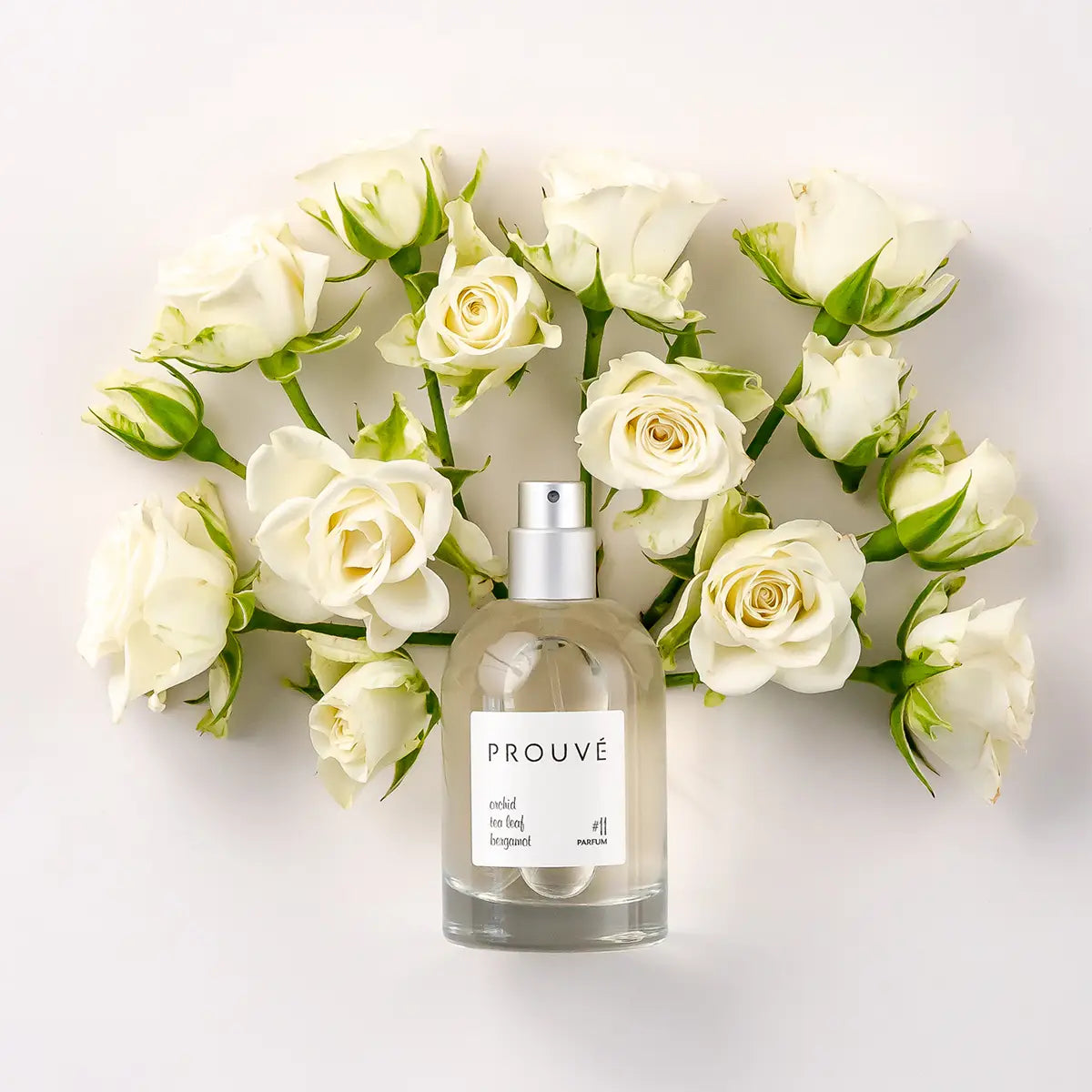
What does it mean for you? Stable quality, cohesive aesthetics, and the pleasure of wearing – from the first "spritz" to the soft base that stays on the skin. Prouvé, a Polish brand from Wrocław, uses French fragrance oils (Grasse), combining everyday simplicity with a refined composition – to turn routine into a fragrant ritual.
A micro story from life
You step into the elevator before the meeting. Someone asks, "What is that lovely scent?" You reply, "It's my favorite French bouquet of roses and currant." A smile appears on its own — and you know the fragrance has just made a good first impression.
How to choose French perfume – step by step
First, the short answer: choose a fragrance family (what you like), take into account occasion and season, test it on your skin and… give the fragrance time.
1) Determine the fragrance family (preference and mood)
- Floral – romantic, light or creamy (e.g., rose, jasmine).
- Woody/ambery – warm, sensual, often "evening".
- Citrus/fresh – energetic, perfect “for daytime”.
- Oriental/gourmand – cozier, sweeter, “for the cold”.
- Aromatic/fougère – often basic in men's perfumes.
-
Unisex – balanced, based on contrasts of freshness and warmth.
A helpful point of reference is the classification Fragrance Wheel Michaela Edwards, who organizes families and their relationships.
3) Consider the season and the occasion
- Summer/day: fresh citrus and teas; subtle unisex perfumes.
- Autumn/colder days: amber, vanilla, cedarwood – Women's perfumes and men's in warmer families they will come into their own.
- Evening/events: more intense and more complex chords.
4) Test on the skin (and at your own pace)
Give the fragrance 15–30 minutes to develop its heart and base notes; also check how it pairs with your body lotion. It’s worth revisiting the sample the next day.
5) Store wisely
Keep bottles away from light, heat, and moisture (not in the bathroom). A cool, stable cabinet or the original box will significantly extend the "life" of perfume.
The most common mistakes and myths (and what to do instead)
-
"I rub my wrists so they settle faster."
Instead of this: spray and leave – friction accelerates the evaporation of top notes. -
“The more expensive, the more durable.”
Durability depends more on families and concentrations than from the price. -
"Women's perfume doesn't suit men (and vice versa)."
Fragrance has no gender – try the compositions as well unisex. -
"Sweeter notes must not be used in summer."
It’s fine, as long as it’s in moderation (fewer "sprays," lighter application on clothing). -
“I keep the bottle on the vanity because it looks nice.”
Light and temperature fluctuations "kill" the bouquet—choose a drawer or a box.
Inspiration, comparisons and mini case studies
Case 1: Office and client meetings (daytime)
Looking for discreet elegance: a fragrance with notes of citrus and white florals, 2–3 spritzes, wrists + neck.
Case 2: Weekend in the city (casual)
Tea-like, fruity, gently green accents; spraying onto a sweater (from a distance) will increase projection without overwhelming.
Case 3: Date / evening
Warm, amber-woody. Just 1–2 spritzes on pulse points (neck, crook of the elbow).
French perfumes for autumn – what will work?
Autumn loves vanilla, amber, cedarwood and leather accents. Opt for cozy, "soft" compositions with a distinct base. If you like contrast – choose a fruity-floral top (e.g., pear, currant) and a warm, creamy base.
How can Prouvé help you with this?
Below are a few fragrant suggestions. Treat each as a starting point for on-skin testing:
- Infinite Force – oriental-woody strength with nutmeg, orange blossom and amber. When? Autumn evenings, after-work get-togethers, cooler days. Projection with character, and vanilla in the base gives a creamy softness.
- Absolute Charm – floral-woody elegance: white florals and musk with patchouli and amber. When? Day-to-evening, when you want to combine subtlety with magnetic presence.
- Blossom Symphony – juicy pear and blackcurrant, rose and peony in the heart, a vanilla-cedar base. When? Golden autumn days, walks, weekend outings.
Discover which composition will best tell your story – try samples and compare projection at your own pace.
Frequently Asked Questions (FAQ)
1. How does EDT differ from EDP and Parfum?
The concentration of fragrance oils and thus the longevity/projection: EDT is lighter, EDP fuller and usually more durable, Perfume – the most concentrated.
2. How many "spritzes" are optimal?
Usually 2–4 per EDP, 3–5 per EDT (depending on the composition and surroundings). Always start sparingly and add one if needed.
3. Where should you apply perfume so it lasts longer?
On pulse points: neck, wrists, the crooks of the elbows/knees. Avoid rubbing; you can lightly mist clothing from a distance.
4. How to store the bottle?
In a cool, dry, shaded place (a drawer, a cabinet, the original box). The bathroom is out—moisture and temperature fluctuations shorten the scent's lifespan.
5. Are unisex perfumes for everyone?
Yes. "Unisex" refers to a composition that doesn’t rely on gender stereotypes—what matters is how you feel and how the scent wears on your skin.
6. For autumn, is it better to choose sweeter or fresher accords?
It's up to you—autumn loves vanilla, amber, and woody notes, but fresh citrus still opens the morning beautifully. Combine contrasts for a "wow" effect.
Summary
French perfumes is the art of compromise between tradition, your taste, and everyday comfort. Decide on the family, test at your own pace, and store wisely.
What next? Check which Prouvé fragrance – Infinite Force, Absolute Charm or Blossom Symphony – best suits your autumn mood.
Conclusions
- French perfumes = Grasse craftsmanship + harmonious compositions.
- Start with the fragrance family (floral, woody, fresh, amber).
- Concentration determines the strength: EDT ~5–15%, EDP ~15–20%.
- Autumn likes warm base notes: amber, vanilla, cedar.
- Apply to pulse points, do not rub; 2–4 sprays are enough.
- Store away from light, heat, and moisture.
- Prouvé inspirations: Infinite Force, Absolute Charm, Blossom Symphony.
Last updated: August 2025
Updated the section on fall fragrance picks and added current Prouvé product inspirations (Infinite Force, Absolute Charm, Blossom Symphony) and storage tips.