Do you dream of makeup that lasts longer without the need for touch-ups? Perfectly defined lips can be a subtle accent or the main feature of your makeup, giving you confidence in any situation. The key to achieving this effect lies in the right products and application technique.
Step 1: Choose the right product
You will find many lip liners on the market, but not every one will meet the needs of the modern woman - intense color, durability and ease of use.
When looking for a high-quality product, focus on aspects like longevity, texture and pigmentation. The best ones will have a pleasant, creamy texture, intense pigmentation and stay on your lips for many hours.
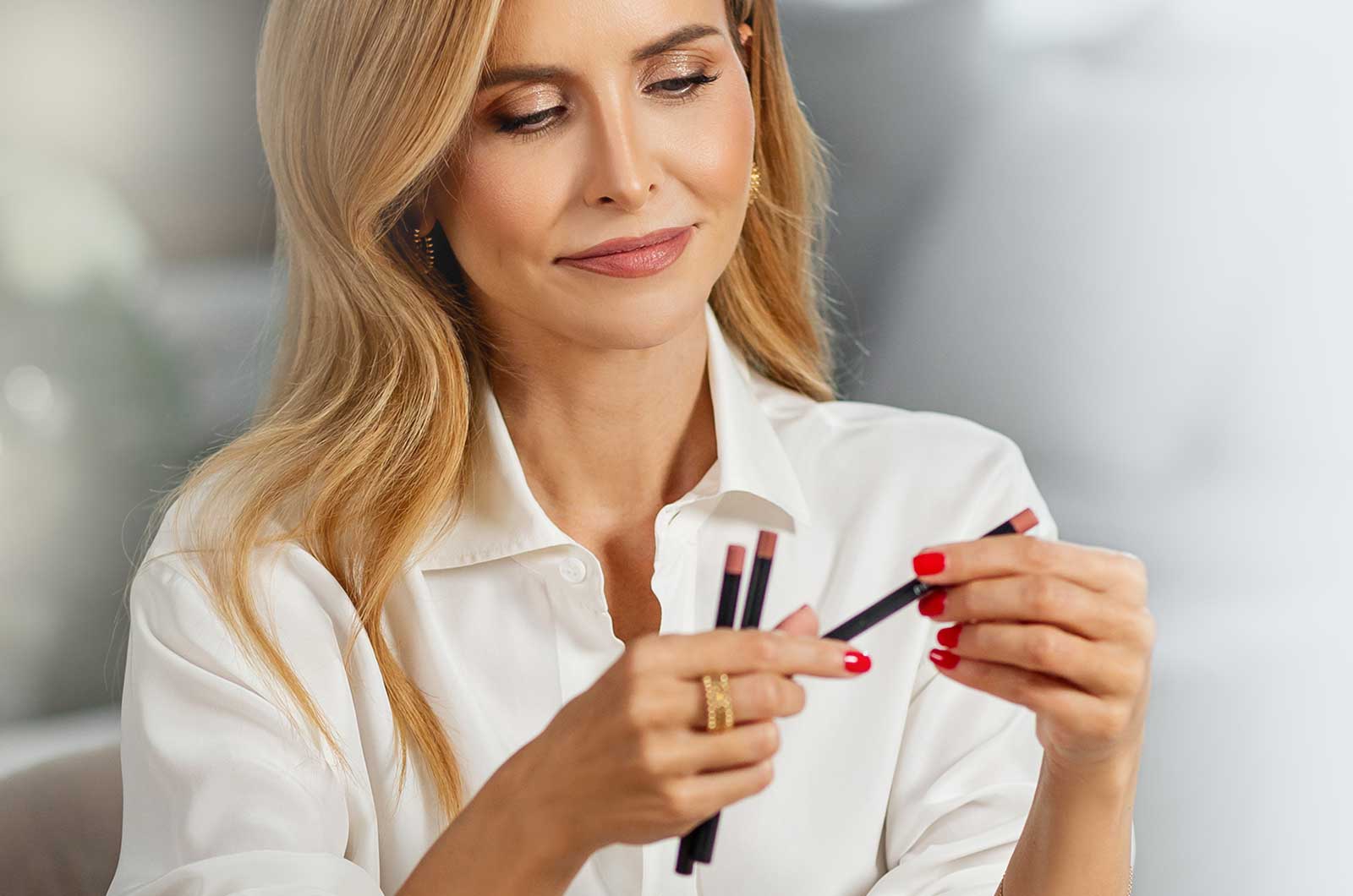
A good example is the long-lasting lip liner from Prouvé. Thanks to high pigmentation, a single stroke is enough to give your lips the desired shape. It is also waterproof and doesn’t require frequent touch-ups, providing a professional result that lasts for long hours regardless of the conditions.
Step 2: Pick a color
If you want to emphasize the natural beauty of your lips, choosing the right shade of lip liner will be key. Match it to your style and the occasion.
pink brown we suggest if you want to well accentuate your facial features and give your lips a natural, healthy tint. If you opt for golden tones and want more definition, a better choice will be caramel brown. Meanwhile, women looking for a deep, saturated shade will be enchanted by cool brown, which will more distinctly define an elegant lip contour.
Step 3: Achieve a professional result
Applying lip liner involves just a few simple steps. How do professionals do it?
1. Define the contour.
Extend the lip liner stick and start from the center of the upper lip, drawing a line along the natural shape of the lips toward the corners. Then trace the contour of the lower lip in a single sweeping motion. If you are using our long-lasting lip liner, you should feel the creamy texture glide smoothly and gently over your skin.
2. Use a balm or lip oil
For better hydration and protection, as well as smoothing, comfort and a more natural finish, you can use a balm or a moisturizing lip oil.
For this purpose you can use one of the nourishing oilsto firm and smooth the lips. If you want to achieve a plump, alluring lip effect, reach for those that provide a plump lip effect.
3. Want more?
To give your lips an elegant, matte finish, you can use the long-lasting lip liner over the entire surface of the lips.
4. Keep it sharp
Choose lip liners with a built-in sharpener. This will make it easier to maintain precise application.
Step 4: Be practical
A properly chosen lip liner is not only about quality and durability, but also practical considerations. To ensure these, opt for the most convenient ones to use. In the case of Prouvé long-lasting lip liners, the proper construction allows you to automatically twist out the stick, which you can easily sharpen.
For the most demanding
At Prouvé we created a high-quality, long-lasting lip liner that combines all the above advantages: it is long-lasting and intensely pigmented, as well as waterproof and easy to apply.
It comes in three colors, so you can easily adapt it to your needs - it is also a convenient choice thanks to its practical and elegant packaging and built-in sharpener.